Premier League vs EFL fixtures: which one feels more relentless?
Relentless is not just a matter of counting matches. It is the feeling that one game has barely finished before the next is already being discussed, previewed, streamed, moved for television or squeezed into a crowded week. By that measure, both the Premier League and the English Football League can wear supporters down — but they do it in different ways.
The Premier League has the glare: global attention, European commitments for some clubs and a fixture list constantly sharing space with cup competitions. The EFL has the grind: more league games in the Championship, long away trips, tight budgets and midweek matches that can feel like a second working week. Here's a story that illustrates this perfectly: made a mistake that cost them thousands.. Neither experience is captured by a simple tally. The question is which schedule leaves fans, players and clubs with less room to breathe.
The basic arithmetic: 38 games versus 46
A Premier League side plays 38 league matches. A Championship club plays 46. That difference is substantial before either team enters a domestic cup, and it gives the second tier a particular kind of relentlessness: there are more league dates to get through, with less margin for a bad spell and often less depth to rotate a squad.
League One and League Two clubs also play 46 regular-season games. Their schedules bring their own practical pressures, from travel and smaller playing resources to the importance of every point in promotion and relegation races. The Championship, however, tends to attract the sharpest comparison with the Premier League because the stakes, crowds and national attention can be so intense while the number of league fixtures remains higher.
Factor Premier League EFL League matches 38 per club 46 in the Championship, League One and League Two Common extra demands Domestic cups; European fixtures for qualifying clubs Domestic cups; EFL Cup and, for eligible clubs, the EFL Trophy Typical pressure point Fixture congestion around cup and European dates A long league campaign, often with frequent midweek matches Squad-depth question Can rotation maintain quality across competitions? Can a thinner group stay fit and competitive over 46 games?Premier League pressure: fewer league games, more layers
I'll be honest with you: the premier league’s fixture pile up is most obvious when a club is chasing several competitions at once. A side in Europe can move from a league match to a continental away trip, then back to domestic action, with cup competitions adding another route through the calendar. A postponement can make the sequence even tighter when the rearranged game has to find a place among dates already spoken for.
That pressure is not shared equally. A club with a deep, expensive squad can rotate more readily than one relying on a smaller group. Pretty simple.. Even then, squad depth is not a magic solution: managers must balance fitness with rhythm, and supporters notice when a much-changed team looks short of understanding. The league may have fewer fixtures than the Championship, but the intensity of the opposition and the consequences of dropped points make each run of games feel heavy.
Kick-off times shape the experience too. A Saturday 3pm start still gives a matchday a familiar outline: travel, a pub or a pie, the ground and the journey home. A televised evening kick-off can turn that into a race from work, while a Sunday fixture may take over the weekend rather than sit neatly inside it. For players, a late finish followed best football betting alternatives by travel can shorten recovery; for fans, it can mean missed trains, childcare changes and a Monday morning after a long trip.
The EFL grind: 46 league dates and little slack
In the EFL, the extra league matches are the starting point, not the whole story. Midweek matches are a regular part of the season, particularly when the calendar needs to accommodate a 46-game campaign. Fans can face a Tuesday night journey after work, then be back in the same routine for a weekend fixture. For players, the challenge is less about one dramatic run of elite-level competition and more about sustaining standards through repeated cycles of training, travel and recovery.
Distance matters. An away trip that looks manageable on a map can become a late return when it follows an evening kick-off. Smaller clubs may also have less ability to replace an injured starter with someone of similar experience. That makes squad depth a weekly concern, not just a talking point for a title contender facing a European double-header.
The league table adds its own pressure. In a promotion race, a dropped point can change the mood around a club by breakfast. Near the bottom, every midweek result can become part of a survival calculation. Add the possibility of a play-off chase and the season can feel like it has several endings, none of them guaranteed to provide relief.
Why the fixture list now follows supporters home
Digital media has made fandom more continuous. The match still occupies two hours, but the conversation can start days earlier in a podcast preview, carry on through live updates and continue in post-match analysis. Supporters follow tactical clips on YouTube, read data-led pieces, listen to club and independent podcasts, and compare opinions in WhatsApp groups or on Reddit. Stats that once lived in specialist publications — pressing numbers, expected goals, shot maps — are now part of ordinary matchweek chat.
That is not to say every supporter wants a tactical lecture with breakfast. It does mean there is more football available between fixtures, and clubs are judged in public for longer. A defeat can generate hours of debate over a substitution or a formation change before the players have completed their recovery session. When the next match arrives quickly, the old one has barely been put away.
Premier League coverage makes this especially visible because national broadcasters and large digital outlets can keep a story moving all week. EFL clubs, supporters and local reporters build a different, often more close-knit conversation, but the habit is familiar: check the team news, listen to a preview, follow the game and then find the reaction. Always-on fandom is not just a Premier League phenomenon. It is simply more heavily amplified at the top.
The second screen: phones in the stand
The mobile phone has become part of the stadium routine, even for people who would rather keep their eyes on the pitch. A phone can be useful when the match is delayed, a friend is trying to find a seat or someone needs to check a train home. It can also turn one live game into a window on the entire division.
Here is a running list of things fans do on their phones at matches:
- Check scores elsewhere in the league, especially when a rival or promotion competitor is playing.
- Refresh a live table to see what a goal has done to the standings.
- Send a WhatsApp message about a missed chance to friends watching at home.
- Look up a substitution, injury update or player statistic on a club app or a live-score service.
- Post a photo, short clip or reaction on Instagram, TikTok or X.
- Check the route home, train times or the weather during a stoppage.
Checking scores elsewhere in the league can sharpen the tension. An EFL supporter may be tracking a promotion rival while watching their own side defend a one-goal lead; a Premier League fan may be following the results around the relegation zone. Yet the phone can also pull attention away at precisely the moment the crowd reacts. The noise rises, heads turn towards the pitch, and someone is still trying to load a score update.
That second screen does not replace the ground. Television can show a replay from three angles; it cannot quite reproduce the collective intake of breath before a penalty, or the way a stand changes when the home side presses towards it. A phone connects a supporter to the wider league, but the matchday ritual remains rooted in the shared place and the people around them.
Rituals still hold their ground
For all the data, clips and alerts, supporters still build the day around familiar habits. There is the same train, the same meeting point, the same walk past the ground, the same debate about whether the team should start with two forwards. At some clubs, a pre-match pub is part of the schedule; at others, it is a quick coffee and a turnstile queue. These routines give a fixture its shape even when the kick-off time has been shifted.
That timing matters. A Saturday lunchtime match can make the rest of the day feel compressed; a 5.30pm start offers more time beforehand but can leave a long journey home. Midweek matches are different again: supporters leave work, travel in the dark and often arrive with only minutes to spare. The ritual survives, but it has to bend around the calendar.
In both the the Premier League and the EFL, the crowd’s response can tell you more than a notification. A quiet spell becomes uncomfortable; a late corner lifts an entire stand. The atmosphere is not a service that can be delivered in full through a stream, however good the picture or commentary. Digital tools add context, but the shared matchday is still the main event.

So which one feels more relentless?
For sheer volume of league football, the EFL has the stronger case. Forty-six league matches create a longer campaign, and regular midweek dates can make the season feel like an endurance test. The burden is particularly clear for clubs with limited squad depth and supporters making repeated journeys after work.
For peak congestion, the Premier League can be harsher. Clubs in Europe and deep cup runs may face a compressed sequence in which recovery time, rotation and travel become central to every team selection. The fixture pile up can arrive in blocks rather than as a steady weekly grind, and the quality of opposition leaves little room to coast.
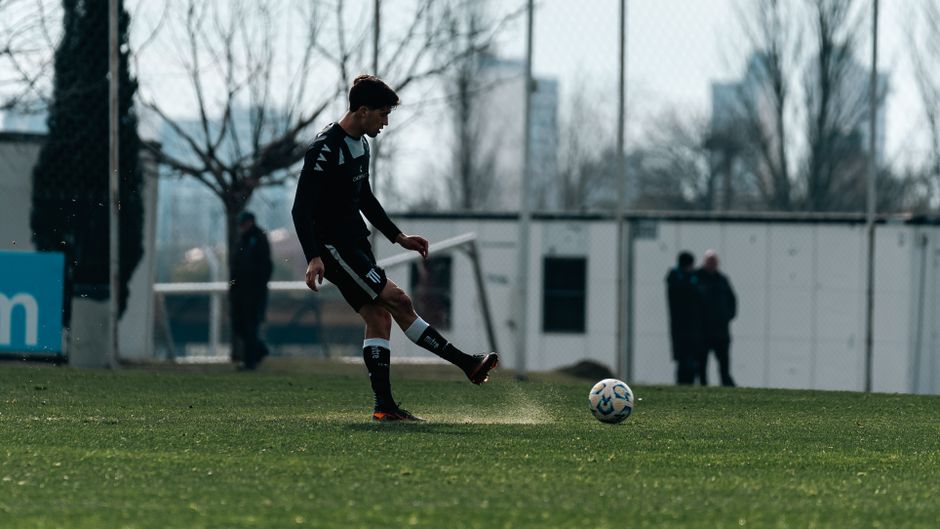
The fairest answer is that they are relentless in different rhythms. The EFL often asks for more: more league games, more repeated travel, more weeks when the next match is already close. The Premier League can ask for everything at once: domestic competition, cup competitions and, for some clubs, Europe, all under intense scrutiny. A fan’s own answer may depend on the club they follow, the distance they travel and whether their team is fighting for promotion, survival or a place in Europe.
What has changed most is the space between games. It is filled with podcasts, tactical breakdowns, score alerts, group chats and second-screen checks from the stands. That makes the season feel longer in the mind, even when the fixture count is unchanged. But the phone goes back in a pocket when the teams walk out. The calendar may be relentless; the reason people keep turning up is still the same: the next match might be the one that changes everything.